
Facebook Ads for Beginners: A Step-by-Step Guide for South African Businesses

Disclosure: some links on this page are affiliate links, which means we may earn a commission at no extra cost to you. We only recommend tools we have used or would use ourselves.
Facebook and Instagram ads remain the cheapest way for most South African small businesses to reach new customers — provided you set them up properly. Get the setup wrong and you can spend a few thousand rand in a week with nothing to show for it.
This guide walks through the whole thing in order: the accounts you need, the budget to start with, how to target, what to put in the ad, and how to tell whether it worked.
The short version
- Install the Pixel before you spend a cent.
- Choose a sales or leads objective. Never engagement.
- Start at R100–R200 a day and change nothing for two weeks.
- Three creatives, not one.
- Judge on cost per lead, never on likes.
Before you spend anything: the two accounts you need
Two things must exist before your first ad, and neither is optional.
1. A Meta Business Portfolio (formerly Business Manager)
Go to business.facebook.com and create one. It holds your Facebook Page, Instagram account, ad account and payment method in one place. Running ads from a personal profile is possible, but it makes handing over to an agency or a staff member much harder later.
2. The Meta Pixel
The pixel is a small piece of code on your website that reports back what happened after someone clicked your ad. Without it, Meta has no idea which ads produced enquiries and which produced nothing — which means its algorithm cannot optimise, and neither can you.
In your Business Portfolio, open Events Manager, create a Pixel and install it. If your site runs on WordPress, plugins handle this without touching code. If you would rather not risk it, this is a twenty-minute job for whoever maintains your site.
Once it is installed, define the actions that count as a conversion: a contact form submission, a phone click, a purchase. Those are the events you will optimise towards.
Step 1: Choose one objective — and make it sales, not engagement
Meta asks what you want. The options that matter for a small business:
- Leads — form submissions, messages, calls. Usually right for service businesses.
- Sales — purchases on your site. Right for e-commerce.
- Traffic — clicks to your website. Use it to warm up a cold audience, not as your main campaign.
Avoid the Engagement and Awareness objectives when you are starting out. They are cheap and they feel good, because likes and reach go up. They also attract people who like things but never buy anything. Meta will find you plenty of those.
Step 2: Set a budget you can sustain for a month
Start at around R100 to R200 per day. That is roughly R3,000 to R6,000 a month, and it is enough for Meta's algorithm to learn who responds to your ad.
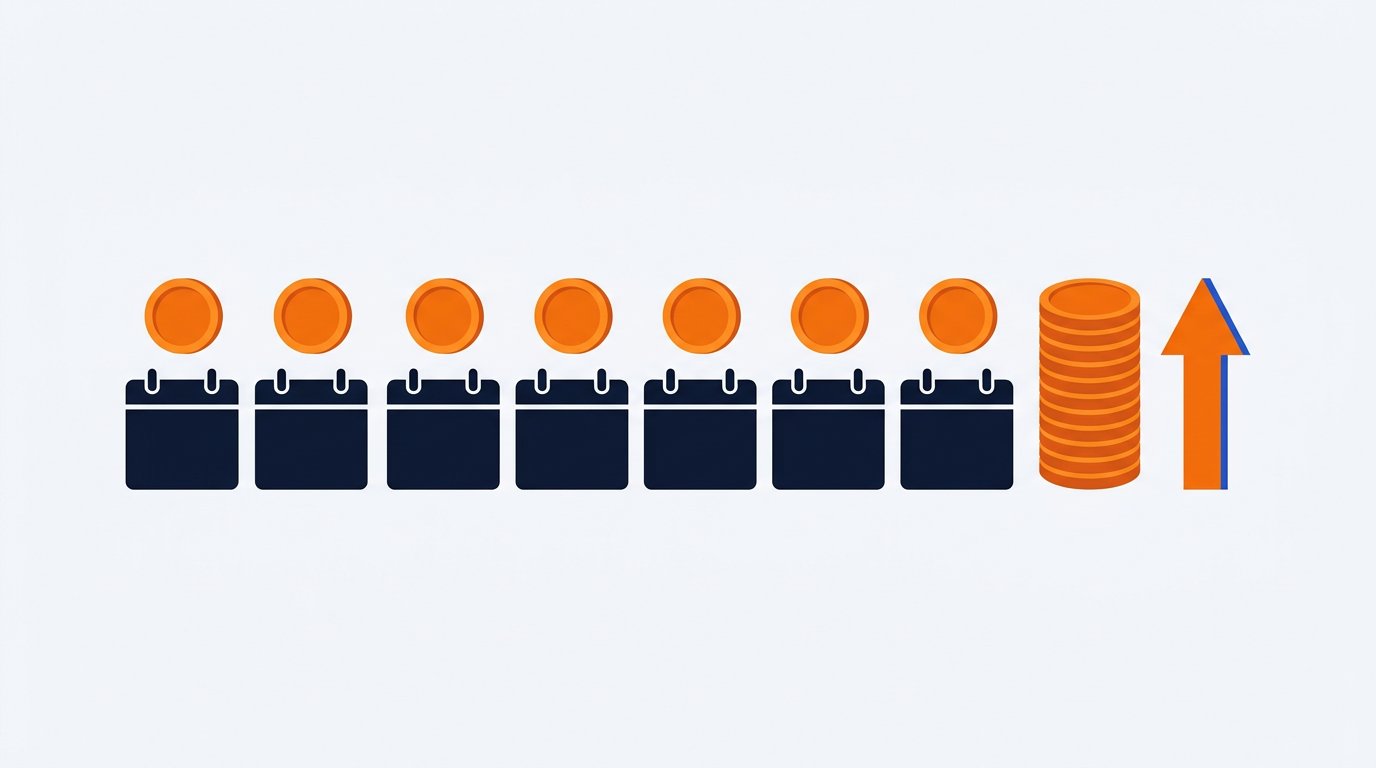
Two things about budget:
- Daily matters more than total. R3,000 spent at R100 a day will outperform R3,000 spent in two days, because the algorithm needs time and repetition to learn.
- Give it two weeks before judging. Meta's learning phase takes roughly that long. Changing the ad on day three resets the learning and you start again — this is the single most common way beginners waste money.
Step 3: Target South Africa properly
Default targeting is far too broad, and broad targeting is where most wasted spend goes.
- Location: Set it to the areas you can actually serve. If you are a Cape Town plumber, target Cape Town — not South Africa, and not the world. Check the setting is "people living in this location" rather than "people recently in".
- Age and gender: Only narrow this if you genuinely know your buyer. Otherwise leave it broad and let the data tell you.
- Detailed targeting: Interest and behaviour targeting is less powerful than it used to be, because Meta's algorithm now does much of the work. Use it to aim the ad in the right direction, then let broad delivery find the buyers. Over-narrowing here is a classic beginner mistake.
Step 4: Build three creatives, not one
Creative does more for your results than any targeting setting. One ad gives you one chance; three gives you a comparison.

Produce three versions with genuinely different angles — not the same image in three colours:
- The problem. Name the thing your customer is dealing with, plainly.
- The result. Show the outcome, ideally with proof: a number, a photo, a review.
- The objection. Answer the reason people hesitate — price, time, trust.
Shoot them on a phone, vertically, in good daylight. Authentic footage consistently beats polished stock imagery on Meta, because polished imagery looks like an advertisement and people scroll past advertisements.
That said, video usually outperforms static images, and making three versions of one video by hand is slow. InVideo is the fastest route from a script to three finished vertical cuts, and PosterMyWall covers the static versions and the correctly-sized variants without a designer.
Step 5: Write copy that is specific, not clever
Your ad copy needs three things, in this order:
- The problem, in your customer's words. Not your industry's words.
- The result they get. Be concrete.
- One clear next step. One button, one action.
Write at about a Grade 7 reading level. If your copy could sell any business in any industry, it will sell nothing.
Step 6: Judge on cost per lead, never on likes
Once the campaign has been running a fortnight, check these numbers:
- Cost per result — what each lead or sale cost you. Compare it to what a customer is worth. If a lead costs R80 and one in five becomes a customer worth R2,000, the campaign is working.
- Click-through rate — below about 1% means the creative is not stopping the scroll.
- Frequency — once this climbs past roughly 2.5, the same people are seeing the ad repeatedly and performance usually drops. Time for fresh creative.
Set up proper conversion tracking before you start, or these numbers will not be trustworthy. Our guide to measuring advertising ROI in South Africa covers the same principles, and they apply identically to Meta.
One practical note: ad platforms tell you what a lead cost, not what a lead became. Once enquiries start arriving you need somewhere to put them — a free CRM such as HubSpot connects the ad to the eventual sale, which is the only way to know your true cost per customer.
The five mistakes that cost beginners the most
- Boosting posts instead of running campaigns. The boost button optimises for engagement. Use Ads Manager and choose a real objective.
- No pixel. You cannot optimise what you cannot measure.
- Targeting everyone. Narrow to the areas you serve.
- Changing the ad before it finishes learning. Wait two weeks unless something is badly broken.
- Judging on likes. Judge on cost per lead.
Facebook Ads or Google Ads first?
If your budget is small, start where the intent already is — Google. Someone searching "emergency plumber Cape Town" wants that service today. Meta is better at creating demand among people who are not looking yet, which makes it excellent as a second channel once Google is working.
We go into detail in our comparison of Google Ads versus Facebook Ads for South African businesses, and there is a step-by-step walkthrough for the Google side in how to start Google Ads for a small business.
Frequently asked questions
How much should a beginner spend on Facebook ads?
R100 to R200 a day is enough to learn and to get meaningful data. Below about R50 a day the algorithm struggles to optimise.
How long before I see results?
Give it two weeks for the learning phase, then another two to judge properly. Judging on day three is the most expensive habit in advertising.
Do I need an Instagram account?
No, but it is free reach. Meta will place ads across Facebook, Instagram, Messenger and Audience Network from the same campaign unless you restrict placements.
Should I use Advantage+ or manual campaigns?
Start manual. Advantage+ automation works well once you have conversion history for it to learn from; on a brand-new account it has nothing to work with.
Need a second pair of eyes?
If you would rather not learn this by spending your own budget, we set up and manage Meta campaigns for South African businesses. Start with a digital marketing audit and we will tell you honestly whether paid ads are the right next step for you.
